
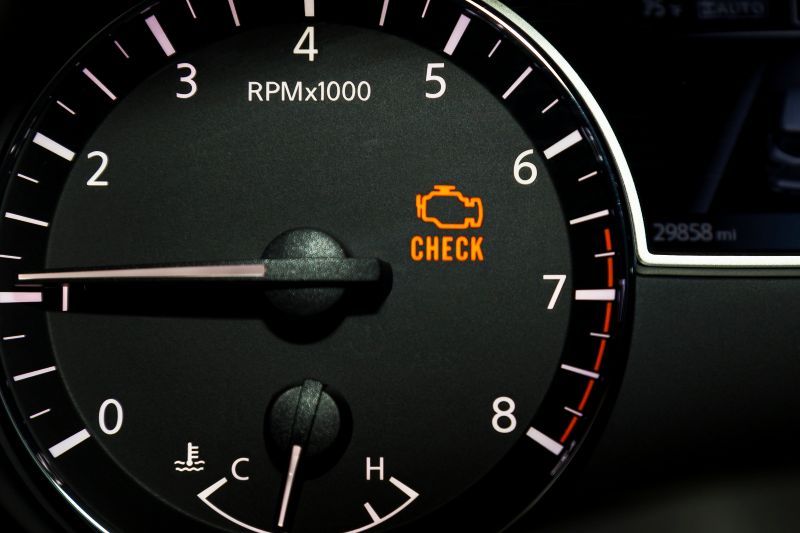
The Mitsubishi check engine light is one of the most important alerts on your dashboard. It’s designed to notify you when something in your vehicle isn’t operating as intended—sometimes minor, sometimes more serious. For drivers in Morgantown, addressing this warning early can help prevent reduced performance, lower fuel efficiency, or more expensive repairs down the road.
Understanding the most common reasons this light turns on can help you respond quickly and make informed decisions about next steps.
Common Mitsubishi Check Engine Light Causes
1. Loose or Faulty Gas Cap
A loose or damaged gas cap is one of the most common—and easiest to fix—causes of a check engine light. The gas cap helps seal the fuel system and maintain proper pressure. If it isn’t tightened fully after refueling, the system may detect a leak and trigger the warning light.
In many cases, tightening or replacing the gas cap resolves the issue after a few normal drive cycles. If the light remains on, a professional inspection is recommended.
2. Oxygen Sensor Malfunction
The oxygen sensor measures the amount of oxygen in the exhaust and helps regulate the air-fuel mixture. When this sensor fails, it can cause increased emissions, reduced fuel economy, and inconsistent engine performance—along with illuminating the check engine light.
Prompt replacement is important, since a faulty oxygen sensor can place added stress on the catalytic converter if left unresolved.
3. Worn Spark Plugs or Ignition Coils
Spark plugs and ignition coils play a critical role in engine combustion. As these components wear, misfires can occur, leading to rough idling, hesitation during acceleration, and a check engine warning.
This is a common maintenance-related issue and typically straightforward to repair once properly diagnosed.
4. Catalytic Converter Concerns
The catalytic converter reduces harmful exhaust emissions. When it becomes clogged or damaged, drivers may notice reduced power, lower fuel efficiency, and an illuminated check engine light.
Many catalytic converter issues stem from ignoring earlier warning signs, such as failing oxygen sensors or ignition problems. Routine maintenance helps reduce the likelihood of this more complex repair.
5. Mass Airflow Sensor Problems
The mass airflow sensor measures how much air enters the engine so the proper fuel mixture can be delivered. If the sensor becomes dirty or fails, symptoms may include rough idling, hesitation, and poor fuel economy—along with the check engine light.
Professional diagnostics ensure the issue is accurately identified and corrected.
How Moses Mitsubishi of Morgantown Can Help
When your Mitsubishi check engine light comes on, accurate diagnostics are essential. The service team at Moses Mitsubishi of Morgantown uses manufacturer-specific diagnostic equipment to pinpoint the exact cause of the warning—not just the symptom.
Their services include:
- Comprehensive system diagnostics
- Repairs using genuine Mitsubishi parts
- Preventative maintenance to reduce future warning lights
Addressing a check engine light early helps protect your vehicle’s performance and reliability. With certified technicians and model-specific expertise, Moses Mitsubishi of Morgantown provides the confidence that your vehicle is being serviced correctly from the start.
Connect with us


- 2025 Mitsubishi Eclipse Cross
- 2025 Mitsubishi Eclipse Cross Trim Levels
- 2025 Mitsubishi Outlander
- 2025 Mitsubishi Outlander Plug-in Hybrid
- 2025 Mitsubishi Outlander Sport
- 2025 Mitsubishi Outlander Sport Features
- 2025 Mitsubishi Outlander Sport Trim Levels
- 2026 fuel efficient suvs
- 2026 Mitsubishi Eclipse Cross
- 2026 Mitsubishi Eclipse Cross Morgantown
- 2026 Mitsubishi Eclipse Cross Trim Levels
- 2026 Mitsubishi Model
- 2026 Mitsubishi Motors Confidence Warranty
- 2026 Mitsubishi Outlander
- 2026 Mitsubishi Outlander PHEV
- 2026 Mitsubishi Outlander Sport
- 2026 Mitsubishi Outlander Sport Trim Levels
- 2026 Mitsubishi Outlander Trail Edition
- 2026 Mitsubishi SUV
- 2026 Mitsubishi SUVs
- 2026 Mitsubishi Warranty
- 2026 SUV Morgantown
- Auto Finance, Morgantown, WV
- Auto Lease Vs. Auto Loan
- Battery Service Morgantown
- Benefits of Leasing a Mitsubishi
- Best 2025 Cross Over SUVs
- Best 2025 Family SUVs
- best fuel efficient mitsubishi suvs
- Best Mitsubishi Family SUVs
- Brake Service Morgantown
- Car Winterization in Morgantown, WV
- Car Winterization in West Virginia
- Check Engine Light Causes
- Compact SUV Morgantown
- CPO Cars For Sale Morgantown, WV
- CPO Mitsubishi Vehicles Morgantown, WV
- CPO Vehicles Morgantown, WV
- Finance Department in Morgantown
- high mpg mitsubishi suvs
- How to jump start your Mitsubishi
- How To Winterize Your Car
- How To Winterize Your Mitsubishi
- Impressive Features of the 2025 Mitsubishi Outlander Plug-in Hybrid
- Mistubishi Outlander Sport WV
- Mitsubishi battery
- Mitsubishi Battery Morgantown, WV
- Mitsubishi Check Engine Light
- Mitsubishi Compact SUVs
- Mitsubishi Engine Service Morgantown
- Mitsubishi Finance in Morgantown
- Mitsubishi Lease
- Mitsubishi Maintenance Morgantown
- Mitsubishi Outlander Trail Edition Morgantown, WV
- Mitsubishi Parts Morgantown
- Mitsubishi Summer Maintenance Tips
- Mitsubishi Tires Morgantown, WV
- Mitsubishi Warranty
- Morgantown Auto Finance
- Morgantown Auto Repair
- Morgantown Auto Service
- Morgantown Car Inspection
- Morgantown Car Trade In
- Morgantown Car Upgrade
- morgantown dealership
- Morgantown Eclipse Cross
- Morgantown Mitsubishi Service
- Morgantown Mitsubishi Tires
- Morgantown New Mitsubishi Outlander
- Morgantown New Tires
- Morgantown Oil Change
- Morgantown Outlander PHEV
- Morgantown Outlander Plug-in Hybrid
- Morgantown Outlander Sport
- Morgantown Tires
- Morgantown, WV Auto Lease
- Morgantown, WV Auto Leases
- Morgantown, WV Car Lease
- Morgantown, WV Mitsubishi Dealer
- Morgantown, WV Mitsubishi Eclipse Cross
- Morgantown, WV Mitsubishi Lease
- Morgantown, WV Mitsubishi Outlander
- Morgantown, WV Mitsubishi Outlander Plug-in Hybrid
- Morgantown, WV Mitsubishi Outlander Sport
- Morgantown, WV Mitsubishi Service
- Morgantown, WV Tire Shop
- Morgantown, WV Used Cars
- Moses Mitsubishi of Morgantown
- Moses Mitsubishi Service
- New Mitsubishi Eclipse Cross
- New Mitsubishi Outlander Plug-in Hybrid
- New Mitsubishi Outlander Sport
- New SUVs Morgantown
- Service Center Morgantown, WV
- Small SUV Morgantown
- Snow Tires in Morgantown, WV
- Summer Tire & Brake Checklist
- The 2025 Mitsubishi Outlander Plug-in Hybrid vs. the 2025 Mitsubishi Eclipse Cross
- Trade In Dealership Morgantown
- Uncategorized